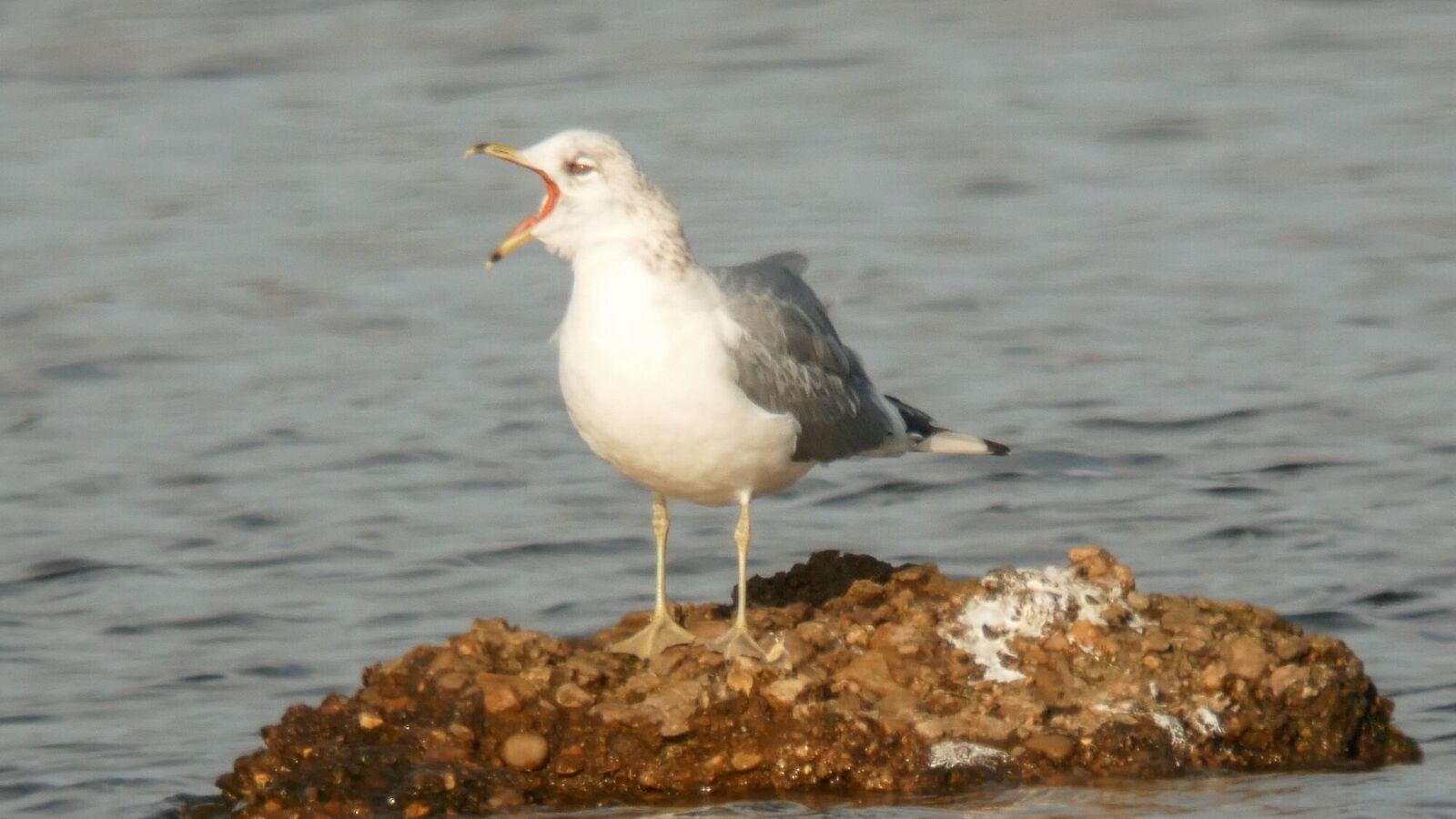
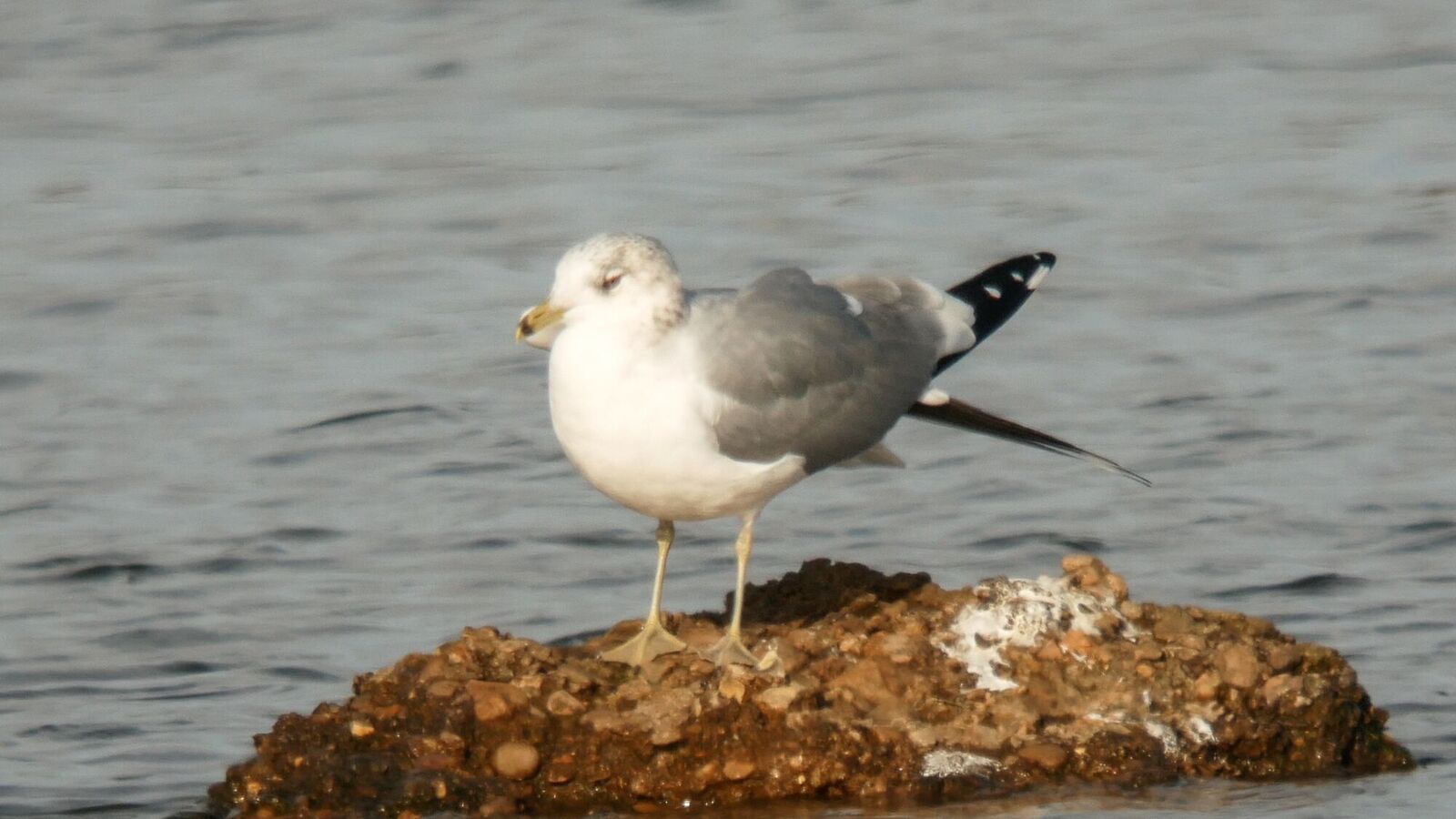
Earlier today, Ian Dawson, a Peterborough birder based in Little Paxton, sent me (as County Recorder, south Lincs) a series of photographs of a gull he and his wife found at Deeping Lakes on January 22nd. His e-mail as follows:
I visited Deeping Lakes yesterday, 22nd Jan, with my wife Debra. When leaving we stopped to scan the east lake from the screen, some time around 1230, and noted a 'Common Gull' preening on a small island. However, when it showed its bill it looked potentially very interesting, so I grabbed the scope and digiscoped some record shots. Unfortunately while taking the scope off the tripod so that I could put the camera with long lens on the tripod instead the bird flew, so I did not see it in flight, nor did Debra as I had passed the scope to her to hold. We could not refind the gull.
I circulated his photos for some expert opinion and received a detailed reply from Dean Nicholson, whose opinion in summary was "This is a
Common Gull". Dean's opinions are given below:
I think the iris actually looks quite dull and only appears brighter than it really was due to it being in direct sunlight? – i often find this to be the case with Common Gulls – (mid pale iris in 17% of Common Gulls in winter according to the DB paper) – One of the N Ireland hybrids here
birdingfrontiers.com/2011/02/15/ring-billed-gull-hybrid/
still shows a much paler iris than the Deeping bird. But having said all that, and subjective i know but it does look quite bulky in the pics, the jizz is of a bigger gull (it might feasibly be a big male canus?), and the mantle looks rather pale although difficult to asses with confidence on a lone bird in bright sunshine, could have done with another Common Gull nearby to compare...and that streaking confined strongly to the hind neck is also reminiscent of a ringer. The excellent Common Gull paper in Dutch Birding (Gibbins & Adriaens 2016) states that ‘up to 73% of Common Gulls show a complete dark bill band in winter’ (of differing proportions).
So in summary i’d say its definitely not a pure Ring-billed, not outside the range of a pure canus and i think if there are Ring-billed genes involved then probably not a F1 (first generation) hybrid.
Would love to see this bird myself though to make an assessment in the field and the usual caveats apply of the difficulty in ‘computer screen identification’....and an open wing shot would be quite revealing..
Nige Lound also replied in similar vein:
This is a Common Gull for me due to darkness of uppers (looks darker than the BHG in the background), the large white tertial crescent, "weak bill" and a gentle expression compared with RGB. Interesting pale eye but still Common for me
Ian's photographs are appended below. Discussion and opinions are invited!
Regards
Phil