
Boosting Breeding Curlew in Lincolnshire
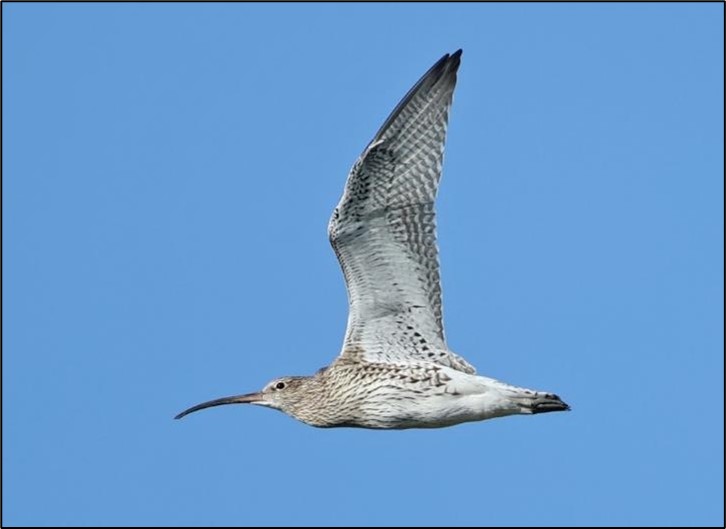
Following up on the LBC Curlew survey we did in 2024 which revealed a population of 30 pairs on airfields in the east of the county, I joined the 2nd European Curlew Fieldworkers Workshop at Lancaster University on 6th to 8th February organised by Curlew Action. I hoped to explore possible ways forward to boost our Lincolnshire breeding Curlew population. It was a friendly and stimulating event attended by Curlew workers from Britain, Isle of Man, Ireland, France, Belgium, Netherlands, Germany, Poland and Norway under the leadership of campaigner Mary Colwell, Director of Curlew Action.
Subjects covered included reports from research and conservation projects all over Britain and Europe with special emphasis on interventions to improve productivity, predator control, community engagement and the use of drones. There was also plenty of opportunity for constructive discussions during breaks and across two evenings with around 80 attendees including academic researchers, field workers, Natural England specialists, BTO, farmers and sundry specialists.
There was also time for a field visit to watch around 500 roosting Curlew on the rising tide in Morcambe Bay and plenty of laughs too. Perhaps the best of these was the opportunity to mimic on a digital recording, a slowed down curlew display call which had the chance when speeded up of sounding like the real thing.
What came across most strongly was the commitment from those present to do their best for Curlews. Given that there is plenty of Curlew habitat in Britain the critical issue is predator control to reduce the loss of eggs and chicks and to boost fledging success to the level required to sustain and grow local populations. The number one predator nearly everywhere is the fox, followed by badgers, corvids and raptors to varying degree in different place.
Successful predator control can be achieved by placing 20m x 20m square 5-7 wired solar powered electric fences around nests. This is done while the curlew is building its clutch to avoid disturbance once the curlew starts to incubate. It requires a team of up to 5 volunteers to be installed effectively. A regular team of watchers are needed to determine when and where a Curlew decides to start nesting. Others are required to put the fence in place as quick as possible. This deters foxes, badgers and to some extent mustelids. In silage and hay fields it has the added advantage of marking the nest so it is not inadvertently destroyed by agricultural machinery. In Darley Dale in Nidderdale in 2025 such interventions raised the success rate of protected nests to over 40%, a big boost compared to 10% experienced by unprotected nests.
The target for sustainability is 45% average productivity rate per annum. This means a population of 100 pairs of Curlew need to produce 45 fledged young every year to sustain the population at 100 pairs. The standard Curlew clutch is 4 eggs so if 400 eggs can produce 45 fledged chicks that’s enough and leaves helluva lot of eggs and chicks for predators!
On grouse moors where nearly everthing predatory is killed, Curlew breeding success is highest but the price is too high for most, especially where it crosses the line in terms of protected birds of prey. Curlews can still thrive without such excesses. One of the most effective combinations employed in some projects is to shoot foxes and trap crows and magpies with Larsen traps from January through to June. This reduces predation pressure when nesting begins in mid-April and minimises the risk that chicks will be taken as they grow to fledging in July.
Another way to reduce predation risk is to avoid the forest predator shadow arising from new forestry plantations. Nests within 2km of woodland are at heightened risk of predation.
I was particularly interested in finding out if headstarting might be tried in Lincolnshire. Apart from predator control and decent curlew breeding habitat the key appears to be to have local feeding curlews that headstarted birds can learn from by example about feeding and predator avoidance. One of our issues is likely to be that female Curlews will range a long way from their release sites, anywhere from 1 to 204 km (mean 48 km) to find males and that could end up with putative Lincolnshire released birds moving back onto RAF airfields where they originally came from in the egg! This would not be helpful as these birds have less chance of producing natural wild young. Males tend to return to within 0.5 to 7km (mean 2.3 km) from their release site.
How do our Curlews persist on airfields with their eggs being taken? The assumption is that the habitat must be attractive for curlews and the presence of breeding birds attracts immigrant females from Yorkshire and possibly Derbyshire grouse moors which are thought to be the most productive English breeding Curlew populations due to their levels of predator control. It is important to note that once a pair bond is established curlews are massively site faithful and will try breeding for 20 years or more, even if they have no success.
Some real success with headstarting is now being seen on Dartmoor (the King’s favourite project) where the population has increased from 1 to 11 pairs during the last 5 years of head starting.
Attracting Curlews to new sites with suitable habitat where they do not currently breed is described by well known Curlew researcher Harry Ewing who is now with BTO as the holy grail of Curlew conservation. So what are the options? One that BTO is keen to trial is luring Curlews into new suitably protected breeding sites. The plan is to conduct trials with taped calls and model birds though no suitable site has been identified as yet. Perhaps we can help them out with that here in Lincs?
Which ever way we go volunteers will be needed. In many of the local groups established in classic Curlew country, the volunteers tend to be people who love their local Curlews through a deep attachment to their local place. Most aren’t birders but what counts is their enthusiasm and determination to do what it takes to protect their local birds. I think its fair to say that those who have been brought up to recognise spring is on the way when the Curlew turns up and begins display calling, have a deeper attachment to Curlews than the average Lincs resident. So one of our tasks will be to raise the profile of Curlews locally.
The newly published Greater Lincolnshire Nature Recovery Strategy was published in February and can be read here:
http://www.letstalk.lincolnshire.gov.uk/gllnrs-consultation
It covers the full gamut of habitat and species in Lincolnshire. Why not give it a read and feedback your thoughts to the council.
If you have any thoughts about Curlew in Lincs you would like to share with the club please share them with me on chairman@lincsbirdclub.co.uk.
Curlew at Frampton RSPB © Steve Nikols 2018 |
Phil Espin, Chair Lincs Bird Club