
2026 New Years Resolution….
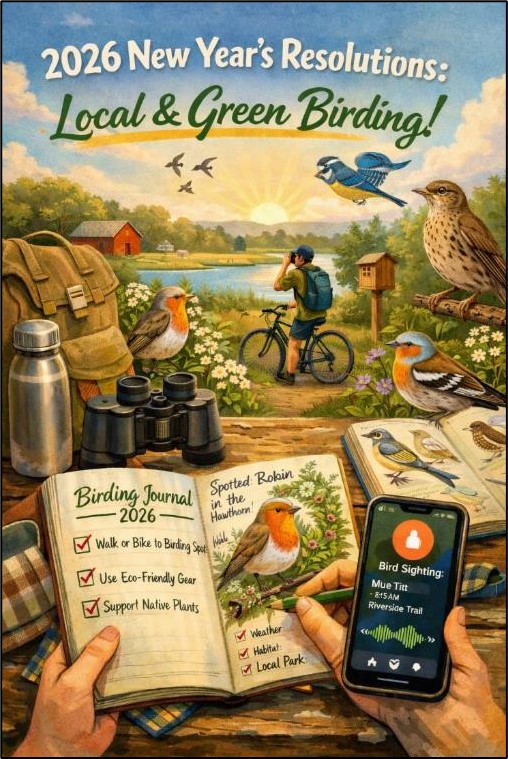
As a new year begins, many birdwatchers find themselves thinking less about adding species to a list and more about how they watch birds, what they record, and the wider impact of their time in the field. A set of thoughtful New Year resolutions can help shift the focus towards ecology, careful recording. One useful resolution is to slow down and learn a local habitat properly. Whether it is a local wetland, saltmarsh, pasture or urban green space, understanding why birds use a site can be far more rewarding than simply noting what turns up. Paying attention to habitat structure, management, weather, tides and seasonal change often explains bird presence better than any rarity alert. Alongside this, making a conscious effort to reduce disturbance, particularly around winter roosts and breeding areas, is one of the most valuable contributions any birder can make.
Recording can also be improved by focusing on quality rather than quantity. Noting behaviour, age, sex, plumage details and habitat use adds real value to records, especially when supported by photographs of the environment as well as the birds themselves. Submitting records regularly throughout the year (BTO Birdtrack or eBird), rather than in a rush at the end, helps local datasets remain accurate and useful. Negative records, where species were searched for but not found, are equally important and often overlooked, yet they can say a great deal about changing bird use of a site.
Adopting a local patch for the year is another resolution that pays dividends. Visiting the same places in all weathers and seasons builds a far deeper understanding than occasional visits ever can. Carefully logging first arrivals and last departures of migrants, learning the calls of common species that still cause hesitation, and paying attention to often-ignored groups such as gulls or common waders can all transform routine birding into something more purposeful. Over time, these repeated visits create datasets that are genuinely useful to county recorders and conservation bodies.
A greener approach to birding is also worth embracing. Walking or cycling to nearby sites where possible, valuing local biodiversity over long journeys for single birds, and making full use of existing equipment rather than constant upgrades all help reduce the environmental footprint of the hobby. Sharing knowledge locally, whether with landowners, schools or survey groups, can further strengthen the link between birdwatching and conservation on the ground.
Finally, there is value in setting personal resolutions that are quiet and reflective. Spending time in the field without a camera or phone, writing a proper site or species summary by the end of the year, and learning to appreciate apparently uneventful days can all deepen enjoyment. Fewer birds watched more carefully often leave a stronger impression than a long list hastily compiled. In the end, these small shifts in approach can make a year of birding more rewarding, more responsible and far more connected to the places and birds that matter most locally.