Willingham Woods
Where to Watch Birds in Lincolnshire
Willingham Woods
by
Stuart Britton - e-mail: stujan1@btopenworld.com

To the north and east of Market Rasen lie a number of woods and plantations amounting to 1300 hectares owned and managed by the Forestry Commission. The best known of these is Willingham Woods whose Picnic Area is visited by thousands of people throughout the year on their way to the coast. The other woods consist mostly of Corsican Pines which were planted in the 1950’s. At the various stages of their growth these provide excellent habitats for a variety of birds.


When I moved to Market Rasen in 1982 I had just begun to learn to be a bird ringer. I was fortunate to find a trainer in Colin Smith who was a member of the Mid-Lincs Ringing Group and lived in the town. Since then I’ve been actively involved in ringing and bird watching at a variety of Forestry Commission sites in the area. In 1988 I started a Constant Effort Ringing Site (CES) in a plantation known as Willingham Forest between Market Rasen and Walesby. This entailed visiting the site on 12 occasions at about 10 day intervals from May to August and putting up exactly the same number of mist nets in the same places for a predetermined length of time (hence the term ‘constant effort’). I chose to start at dawn and carry on for six hours. By the end of the season we hoped to have ringed the majority of adult and first year birds using the site. In subsequent years, re-capturing ringed birds gave a good indication of longevity and site faithfulness. By the end of the first year I was astonished to find we had ringed 146 adult birds and 596 first year birds of 26 species. These included exactly 100 young Willow Warblers!


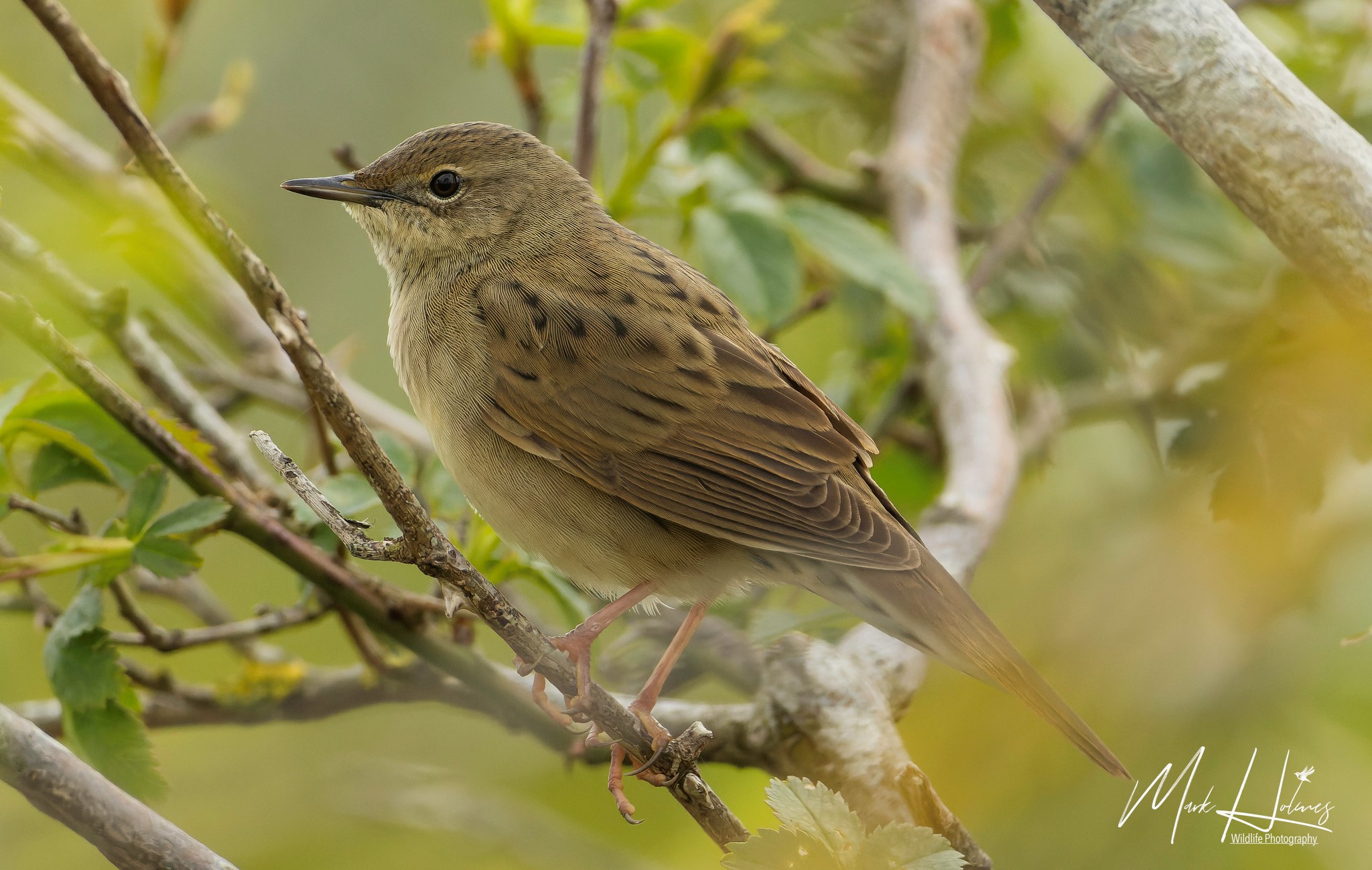
With the help of other members of the Ringing Group we continued the project for 10 years without missing a single visit. During that time we ringed or re-trapped 1,484 adult and 3,305 first year birds of 36 species. Some of the highlights included the only Grasshopper Warbler found at the site in 1990, a party of 5 Crossbills caught whilst going to drink in a puddle in one of the net rides and single Sedge and Reed Warblers well away from their normal habitat. The “Top 10” most plentiful species over the duration of the project were Wren, Blackcap, Dunnock, Willow Warbler, Blue Tit, Robin, Chaffinch, Long Tailed Tit, Whitethroat and Garden Warbler.


The bird that summed up the objects of Constant Effort Ringing and made the whole project worthwhile was an adult male Garden Warbler caught and ringed on our third visit on May 22nd 1988. Over the next 8 years it was re-trapped at least once every year a total of 19 times, handled by 9 different ringers and last caught on May 14th 1995. When you consider it was at least a year old when first ringed it lived a minimum of 9 years, travelled thousands of miles on migration and managed to return to exactly the same net ride every year it is truly staggering. We also had a Chiffchaff and a Blackcap re-trapped in Senegal and Algeria respectively.


In 1997 a lot of the conifers were felled resulting in a drastic change in the habitat with the result that we had to end the CES project but have continued to ring there up to the present time. As recently as January this year we ringed over 50 Redwings roosting in mature blackthorn.

In the last five years there has been significant habitat change throughout Willingham Woods as different areas have been harvested leaving extensive tracts devoid of mature trees. This has led to a reduction of certain species such as Coal Tits and Goldcrests but the welcome colonisation of others, particularly Nightjars and Woodlarks. The open areas have made it much easier to see Crossbills and Siskins which are strongly suspected of breeding annually. In addition to summer ringing we have ringed at various feeding stations established by the shooting syndicates throughout the woods. In harsh weather they are a magnet to numerous finches, buntings, tits and thrushes. The only Corn Bunting and northern race Bullfinches were caught near such sites.

On a national scale, the majority of bird watchers will remember Willingham Woods because of one bird. On December 5th 1992 five members of the Mid-Lincs Ringing Group were catching some of the large concentration of mixed finches feeding on weed seed in a small field in the woods adjacent to the Forestry Commission Offices at Chapel Hill Farm. We were amazed to find a White-throated Sparrow in one of the nets which was ringed and released. It stayed until the following March and was viewed by more than of 5,000 birdwatchers. There was much debate as to how a North American species could find its way to Lincolnshire but it does not detract from the fact that you never know what might turn up on your local patch.

In a few years the re-stocked areas planted with conifers will have grown sufficiently to provide suitable habitat to different species such as Grasshopper Warbler and Short-eared Owl. The Forestry Commission plan is to maintain a diversity of habitat attractive to a wide range of species. I must acknowledge the continuing help and support from a succession of Foresters to allow us to continue our ringing activities on Forestry Commission land over the past 20 years. I now see more birdwatchers in Willingham Woods than I ever did before.

I am collating Nightjar and Woodlark records obtained since the first sites were clear felled. If anyone has any records over the past five years, I would be grateful if they would let me have a copy. If anyone would like further information about Willingham Woods, please contact me..

Stuart Britton, e-mail: stujan1@btopenworld.com

White-throated Sparrow that was present in Willingham Woods Dec 1992

White-throated Sparrow that was present in Willingham Woods Dec 1992 - © Graham Catley

White-throated Sparrow that was present in Willingham Woods Dec 1992

White-throated Sparrow that was present in Willingham Woods Dec 1992 - © Graham Catley


{b}
{c}
All photographs on lincsbirdclub.co.uk are copyrighted by the contributing photographers and may not be reproduced or exploited in any fashion without written permission from the photographer. If you wish to contact any of the photographers on this page, just click on their name underneath their photograph.


We welcome any information on sites in Lincolnshire, that can be e-mailed to us as well as slides and prints that can be mailed to us. Photographs should ideally be in a .jpg format, and resized to an approx. 500 pixel width