For the Latest Upload Images of Lincolnshire Birds and Wildlife Click Here |
||
![]() |
||
Birds in Lincolnshire “Grey areas” – the problem with Chiffchaffs |
||
| “Grey
areas” – the problem with Chiffchaffs
by Alexander Lees
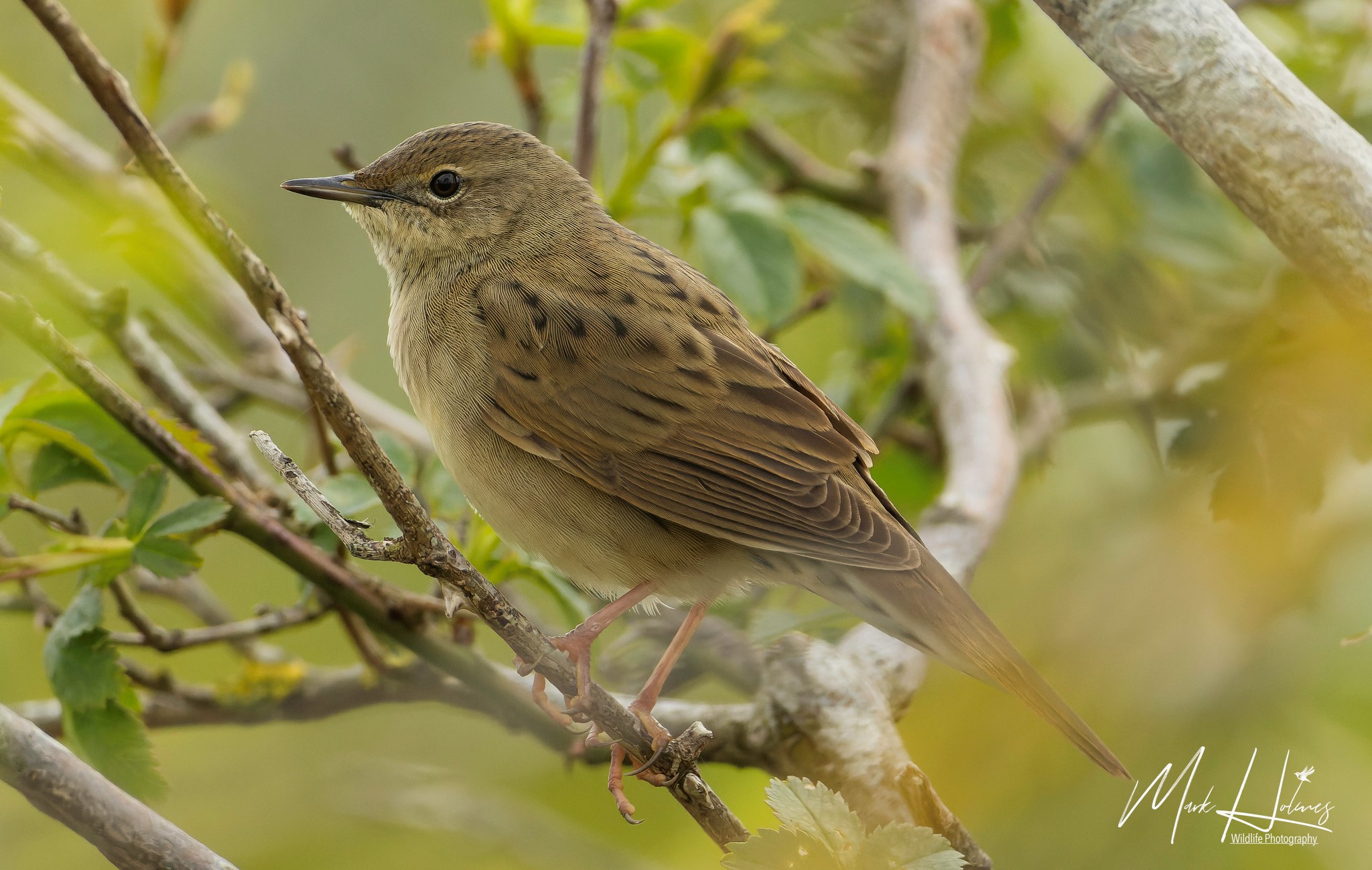
A Chiffchaff showing characteristics of the Eastern form Phyloscopus [colybita] tristis was present at Marston Sewage Treatment Works, Lincolnshire on the afternoon of the 24th December 2003 and was still present the next day, occupying a linear winter territory along the bridleway that transects the site. As can be seen from the accompanying, admittedly poor images (400 asa in low light), the bird is uniformly grey-buff lacking any yellow tones to the body and has a hint of greenish to the remiges bearing a resemblance to a Bonelli’s Warbler sp. The bird’s dusky cheeks, greyish nape and black bill and legs are also all typical of tristis. The bird appeared to lack any distinctive wingbar but this a feature perhaps more likely to be associated with autumn 1st winters and this bird may be the returning individual from the 2001/02 winter. I located the bird by its call a distinctive mournful “veet” or “peet” and immediately recognised it as being this taxon before I caught sight of the bird, having found four previous birds in the UK. Considering the photos and the rendition of the call one would think that the identification of this individual would be fairly straightforward…
Bearing this in
mind it would seem rather oversimplistic to throw away a tristis type
bird if it should vary its vocabulary. Likewise, it would appear most
logical that tristis birds from the western most part of their range
are most likely to occur in Europe and the increasing occurrence frequency
may suggest that new “pseudovagrant” wintering populations
in Western Europe are being established. Furthermore if there is such
overlap in plumage and vocal characteristics between these various new
species can there specific status really be allowed to stand? They are
by virtue of their allopatric breeding ranges and some unique characteristics
perhaps good phylogenetic species, but with the current trend climatic
towards climatic amelioration the differences may either be reinforced
by assortative mating or eliminated by introgression over evolutionary
time. Ultimately the group is a somewhat dynamic assemblage and nit
picking over anthropogenic species concepts may never lead to a clear
resolution of the problem. However, documenting the identification and
thus our ability to ascertain the status of such birds is fundamental
to our knowledge of both migratory flexibility and speciation/introgression
events. Alexander
Lees |
||
|
|
||
For the Latest Upload Images of Lincolnshire Birds Click Here Lincolnshire Bird Club 2001 - 2006 - Website Forktail Design
|
||